

- 5
- 23
- 1
- 1
- 1
- 1
- 42
- 11
- 0
- 2
- 2
- 1
- 1
- 2
- 3
- 16
- 2
- 2
- 5
- 96
- 6
- 1
- 1
- 1
- 1
- 2
- 1
- 5
- 1
- 1
- 21
- 1
- 3
- 1
- 2
- 1
- 2
- 100
- 2
- 54
- 6
- 1
- 155
- 5
- 29
- 1
- 30
- 5
- 4
- 0
- 2
- 2
- 2
- 4
- 0
- 1
- 5
- 6
- 11
- 15
- 23
- 90
- 3
- 14
- 22
- 17
- 4
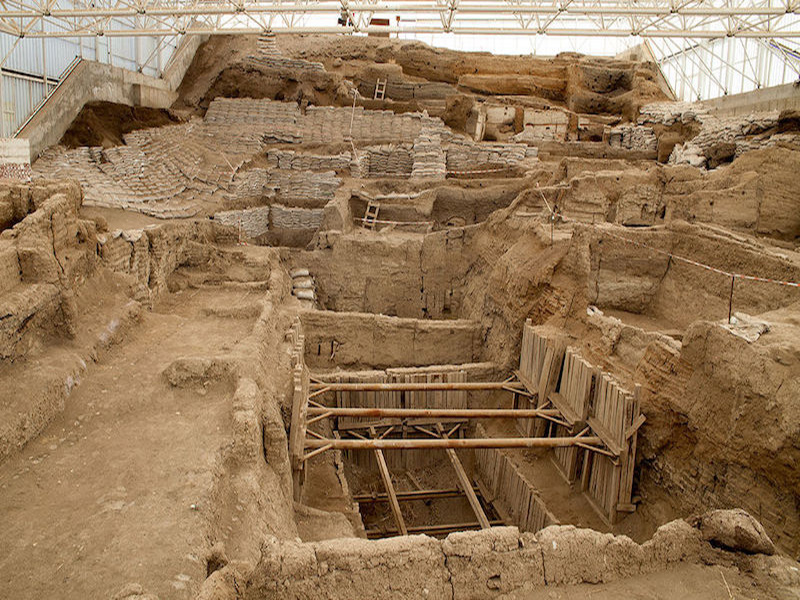
Located about 50 kilometers southeast of Konya, Catalhoyuk is one of the oldest known human settlements, dating back to 7500–5700 BC during the Neolithic period. It is considered one of the most significant archaeological sites in the world, offering rare insights into early human civilization, urban planning, and cultural development.
Discovered in 1958, Catalhoyuk has been excavated extensively, particularly by James Mellaart in the 1960s and later by Ian Hodder and his team since the 1990s. The site covers an area of approximately 13 hectares and consists of two mounds:
The Western Mound (Chalcolithic period, 6000 BC)
In 2012, UNESCO designated Catalhoyuk a World Heritage Site, recognizing its importance in understanding early human settlements.
Unlike later cities with streets and alleyways, Catalhoyuk had no roads—houses were built closely together, with entrances through rooftop openings. Ladders provided access, and people moved across the settlement by walking on roofs.
Each house was constructed using mud bricks and featured:
Catalhoyuk is known for its incredible wall paintings, reliefs, and figurines, which provide insight into early religion and culture. Some notable discoveries include:
The dead were buried beneath houses, often under sleeping platforms. Bodies were typically placed in a fetal position and wrapped in reed mats. Some skulls were later retrieved, plastered, and painted—suggesting ancestor worship.
Catalhoyuk challenges traditional ideas of civilization. Unlike many early cities, it lacked a central government, palaces, or temples. Instead, it seems to have been an egalitarian society, where homes were relatively uniform in size, and there was no evidence of a ruling class. This site provides essential clues about early human society, agriculture, and urban life, making it a must-visit destination for history enthusiasts.
Visitors can explore the excavation areas, reconstructed Neolithic houses, and interactive museum exhibits that bring Catalhoyuk’s ancient past to life. It is an easy day trip from Konya, making it a perfect addition to any itinerary in Central Anatolia.